
The challenge
Critical equipment, energized environment
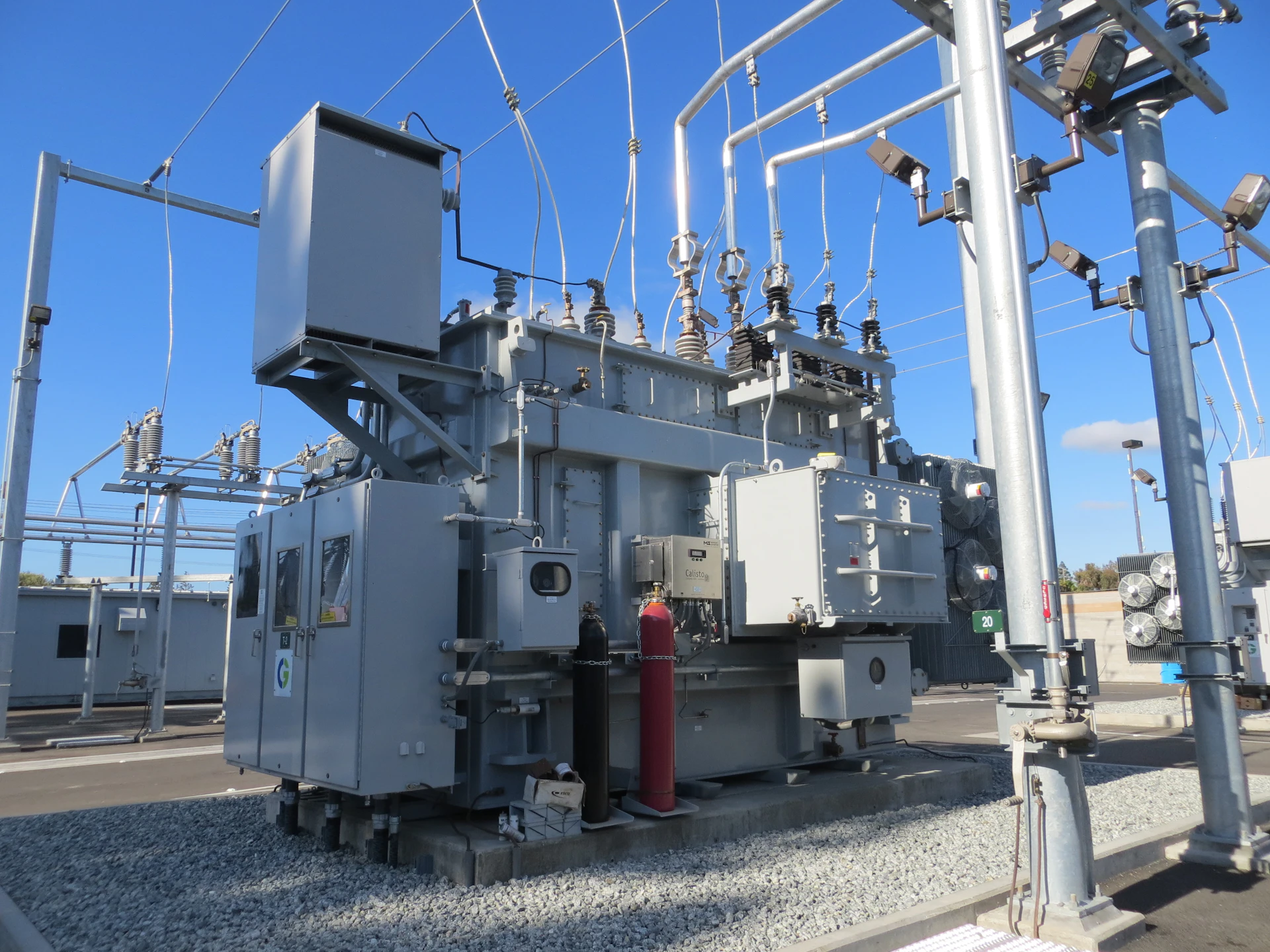
Substations concentrate high-value equipment in a small, energized space. Many failure modes — loose or corroded connections, overloaded components, failing bushings and arresters — produce heat before they fail, and many visible defects are on top of equipment or bus structures that are difficult to see from the ground.
Inspection must be performed without interrupting service, within the utility’s safety rules, and with results that maintenance engineers can trust and compare over time.
- Abnormal heating at connections, switches and terminations
- Transformer bushings, radiators, oil levels and leaks
- Insulator and arrester condition
- Structure, foundation, fence and grounding issues
- Site security, drainage and vegetation within the yard
Our approach
Ground and aerial inspection combined
Infrared survey
Radiometric thermal imaging of electrical connections and equipment, with temperatures recorded and compared against similar components and ambient conditions.
Visual inspection
High-resolution imagery of equipment and structures, including top-down views captured by drone where the utility permits flight.
Site mapping
Orthomosaic and 3D model of the yard for planning, design updates and as-built documentation.
Findings and priority
Each anomaly reported with temperature data, visible-light reference image, location and recommended priority.
Reliable thermal results
Conditions matter
Thermal findings are only meaningful when equipment carries enough load and the measurement accounts for emissivity, reflections, distance, wind and solar heating. Surveys are scheduled with operations to capture representative load, and analysts review each image before reporting.
Thermographic inspection is part of electrical maintenance programs described in NFPA 70B; findings are classified using temperature-difference criteria agreed with your engineers. Read more in our guide to industrial thermal inspection.
Deliverables
What you receive
- Thermal and visible image pairs for every anomaly
- Temperature data, load notes and ambient conditions
- Findings register with priority and location
- Yard orthomosaic and model where in scope
- Trend comparison on repeat surveys
How a substation survey runs
- Scope Sites, equipment lists, priority criteria and safety requirements.
- Coordinate Access, escorts, load timing and drone flight approvals with the utility.
- Capture Thermal and visual imagery from the ground and air as permitted.
- Analyze Temperature analysis, defect classification and report preparation.
- Deliver Findings and imagery to your maintenance team and the Geospatial Platform.
Frequently asked questions
Do you fly drones inside energized substations?
Only with the utility’s authorization and under a site-specific safety plan defining flight areas and distances. Where flight is not permitted, inspection is performed from the ground.
How often should substations be surveyed?
Frequency depends on equipment criticality, condition and your maintenance program. Many programs survey at least annually; NFPA 70B provides guidance on intervals based on equipment condition.
Can results be compared year over year?
Yes. Repeat surveys use consistent viewpoints and naming so temperature trends and changes can be tracked.
Related
Related services and references
Thermal Inspection
Radiometric infrared inspection for electrical and mechanical assets.
Transmission Line Inspection
Structure, conductor and clearance inspection for transmission lines.
Industrial thermal inspection guide
How infrared inspection works and how severity is classified.